Kingshot
- 4.4
- Rating
- 50.00M
- Installs
- Free
- Price

 Analysis by App-foxy
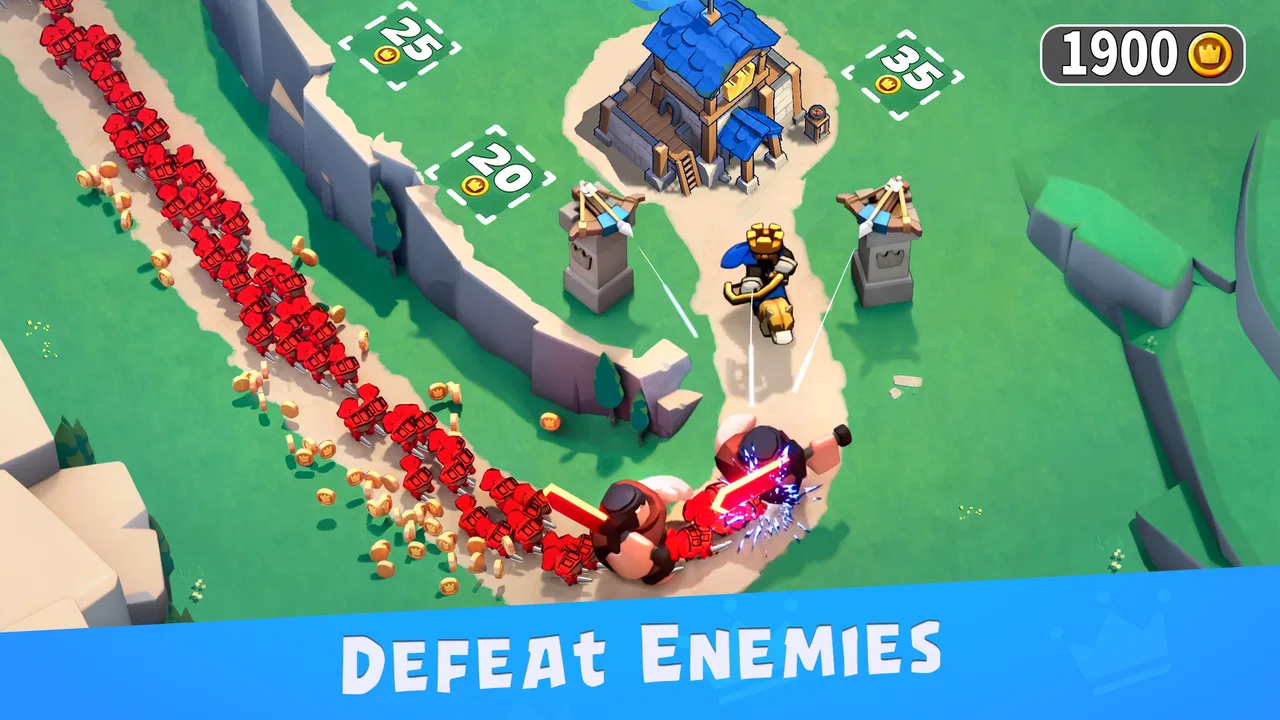
I spent time with Kingshot as a medieval strategy game built around returning often, making decisions in small sessions, and gradually shaping a growing kingdom. My first impression was that it wants to be more than a quick tap-through game: there is a steady stream of choices, upgrades, battles, and management tasks competing for attention. That makes it easy to check during a spare moment, but it also means the experience is best understood as a long-term routine rather than a single dramatic campaign.
Century Games PTE. LTD. presents it as an idle strategy title, and that description matters. The game is designed to keep progress moving while you are away, then give you reasons to come back and collect, improve, and plan the next step. I found that rhythm more appealing than games that demand constant concentration, although players who prefer direct control over every action may find the idle structure less satisfying.
How the game feels from the first session onward
The opening hours are focused on showing you how the kingdom works and encouraging a regular sequence: check available rewards, improve something useful, handle the current objective, and prepare the next upgrade. This creates a clear sense of momentum. You rarely wonder what to do next, which is helpful when you only have a few minutes, but the guided flow can also feel restrictive if you want to ignore the suggested path and experiment immediately.
You May Also Like

 Pandora - Music & Podcasts
Pandora’s Music Is Easy to Start, but Harder to Recover
Pandora’s strength is its low-effort path from a seed to a station. Its weak spot is how much confidence it asks you to place in connection, setup, and quiet recovery.

 8 Ball Pool
 Is Built on Rivalries, Rematches, and Routine
A close look at the rivalries, rematches, shared routines, and unanswered safety questions that turn a quick pool match into a persistent mobile community.

 Samsung Music
’s Quiet Strength Is Playing What You Already Own
Its reach comes less from spectacle than from dependable access to a personal library. That simplicity is both the app’s strongest retention engine and its ceiling.

 AccuWeather: Weather Radar
AccuWeather Review: A Quick, Clear Forecast for Everyday Decisions
For everyday plans, the best forecast is the one you can understand quickly. AccuWeather makes rain timing, radar, and local conditions easy to act on, with a few trade-offs.

 Hill Climb Racing
Why Hill Climb Racing Still Turns Crashes Into One More Run
A tiny car, a bumpy hill and one more upgrade: Hill Climb Racing keeps resurfacing because its simple chaos makes every near-miss feel personal.

 AliExpress - Shopping App
AliExpress Makes Global Shopping Feel Personal, but Shoppers Bear the Risk
AliExpress turns a global marketplace into a pocket-sized discovery engine. Its reach is useful, its shopping loop compelling, and its trade-offs easy to miss.
More From Our News Desk
View All News


Speed is one of the more important parts of the experience. Progress often feels quick when several early tasks resolve close together, especially when the game gives you multiple improvements to make at once. That early acceleration is useful because it lets you understand the basic loop without waiting through a long period of inactivity. Later, the pace becomes more deliberate, and planning starts to matter more than simply tapping through every available action.
I would not describe the game as a fast strategy title in the same way I would describe a real-time competitive game. Its speed comes from the frequency of decisions and the regular return cycle, not from constant battlefield pressure. You can make progress in short visits, but the larger gains are built through repeated attention over time.
What a normal day with the kingdom looks like
A realistic use case is checking in during a commute, lunch break, or while waiting for an appointment. I would open the game, review what had finished, spend the available resources on a priority improvement, and then set up the next action before leaving it again. That routine is more comfortable than trying to play continuously for a long stretch, because the idle design is clearly meant to support brief visits.
The useful trick is to treat each visit as a planning session rather than a shopping trip through every menu. I found it better to decide what my next important goal was before spending resources. If I used everything on small improvements just because they were available, I could make the kingdom look busier without moving toward a meaningful milestone. Saving for a larger objective made the progression feel more controlled.
Another practical habit is to avoid opening the game when I know I cannot pay attention to the result. Starting several actions and immediately closing the app is not always as useful as taking a moment to check what the action is meant to accomplish. The idle elements reduce the need for constant supervision, but they do not remove the value of choosing the right order.
Where the workload becomes heavier
The most demanding moments are not necessarily battles. They come when several systems ask for attention at once: completed activities, new improvements, available rewards, and a fresh objective. The game can feel pleasantly busy here, but the number of small decisions may also create friction. Players who enjoy organizing a checklist will probably appreciate this. Players who want one clear objective may feel that the interface is asking them to juggle too much.
Longer sessions can expose that difference in taste. At first, there is enough new information to keep the experience interesting. After the initial learning period, repeated collection and upgrading can become routine. I enjoyed these sessions more when I approached them with a specific purpose, such as preparing for a stronger development step, instead of trying to complete every visible task.
Resource management is where patience becomes important. The temptation is to spend immediately because the game constantly presents something that can be improved. That is not always the best decision. I got better results by identifying which upgrades supported my current direction and leaving less urgent options untouched. This is a small but meaningful trade-off: the game rewards attention to timing more than indiscriminate spending.
The presence of in-app purchases also affects how I evaluate the heavier sections. The game is free to download and play, but optional purchases range from $0.99 to $99.99 per item. I would advise setting a personal spending limit before becoming invested in the kingdom. The most comfortable way to approach this title is as a free player who accepts a slower rhythm, rather than expecting every delay to disappear through purchases.
Stability and recovery in everyday use
From a reliability perspective, the idle format is forgiving. If I leave the game for a while, I do not feel that I have failed simply because I was away. Returning after a gap can be satisfying because there is usually something to review and a new decision waiting. That recovery loop is one of the strongest reasons to choose this game over a strategy title that punishes missed sessions immediately.
There is a difference between recovering from absence and recovering from a poor decision, though. Idle progress can help rebuild momentum, but it cannot always undo resources spent on the wrong priority. I recommend pausing before confirming a major improvement, especially when several options appear attractive. The game is accessible enough for casual play, yet it still benefits from a little discipline.
I also found that the best recovery strategy after a busy day is to focus on one useful chain of actions. Instead of trying to clear every notification or menu, I would collect what was ready, select the next sensible improvement, and leave the rest for later. This keeps the return session manageable and prevents the game from turning a short break into an unwanted chore.
Device expectations and practical limits
Kingshot supports devices running Android 7.0 or later, which gives it a broad compatibility range. That does not mean every supported device will feel identical. Older phones may be less comfortable during extended sessions, particularly when the game is showing more activity or when several interface elements are being updated together. I would treat the minimum operating system as a compatibility threshold, not a promise of identical smoothness on every handset.
Resource demands are also easier to judge by play style. Short check-ins are likely to be less demanding than leaving the game open for a long session, simply because the device has less time to handle continuous activity. If your phone already struggles with other visually busy games, I would be cautious about expecting the same responsiveness here. A newer device is not essential for understanding the game, but it may make longer visits more comfortable.
Battery awareness matters for any title that encourages frequent returns. My practical advice is to avoid treating it like a game that must remain open all day. The idle design is more useful when you close it after making your decisions and come back later. That approach also fits the game better: it preserves the feeling of a kingdom developing between visits instead of turning the phone into a permanent dashboard.
Storage and connection habits can influence the overall experience too, even when the core loop is simple. I prefer starting a longer session when I have a stable connection and enough battery, rather than beginning during a rushed moment. This is especially sensible when I expect to review several upgrades or spend time comparing choices. The game is easier to enjoy when it is part of a planned break instead of something competing with another task.
How it compares with other strategy games
Compared with traditional turn-based strategy games, this one asks for less uninterrupted concentration. You are not required to sit through a full match to feel that your visit mattered. The trade-off is that individual decisions can feel smaller, because the larger result comes from repeated upgrades and return cycles rather than one carefully played battle.
Compared with city-building games that demand constant manual production, the idle structure is more forgiving. Missing a session does not make the whole kingdom feel abandoned. However, players who enjoy detailed placement, open-ended construction, or complete control over a settlement may find Kingshot too guided. Its appeal comes from managing priorities within a defined progression path, not from building an endlessly customized city.
It also differs from competitive strategy games where the main excitement comes from reacting to human opponents in real time. Here, the satisfying moments are more personal: seeing a planned improvement complete, preparing for the next objective, or returning after time away to find the kingdom ready for another step. If you want immediate tension and unpredictable opponents, another strategy game would probably suit you better.
Who will enjoy it, and who should skip it
I think the game is a good fit for players who like medieval themes, gradual development, and short sessions that add up over the day. It is particularly suitable for someone who wants strategy without committing to a complete match every time they open an app. The idle component gives casual players room to step away, while the upgrade choices provide enough involvement to make returning feel purposeful.
It is less suitable for anyone who dislikes waiting, repeated collection, or purchase prompts in free-to-play games. Even with a plan, the experience is built around gradual progress. If you need every action to produce an immediate, dramatic result, the slower later rhythm may test your patience. I would also skip it if your main interest is deep tactical combat rather than kingdom development.
The age rating is Everyone 10+, so families looking for a strategy game in that range may consider it, while still remembering that in-app purchases are present. For younger players, I would personally use device purchase controls and discuss spending before handing over the phone. That is not a criticism of this specific game so much as sensible preparation for any free title with optional items.
Small decisions that improve the experience
My first useful rule is to choose a goal for each visit. A goal might be improving one important area, preparing resources for a larger step, or simply collecting and setting the next idle action. This prevents the interface from deciding your priorities for you. It also makes short sessions feel successful even when you do not have time to explore everything.
My second rule is to separate immediate rewards from long-term value. A small reward that can be claimed now may be tempting, but it is worth considering whether it supports the next meaningful improvement. I found that this simple pause reduced waste and made the progression feel less random. The game does not require a complicated spreadsheet; it rewards noticing which option helps the current plan.
My third tip is to use longer sessions selectively. When the game has several completed activities waiting, a focused review is worthwhile. On ordinary days, a brief check-in is enough. This balance keeps the idle format working in your favor and reduces the chance that routine management starts feeling like administrative work.
Finally, I would not judge the game only by its opening speed. The early flow is designed to teach and encourage momentum, while the later experience asks whether you enjoy maintaining a plan. If you like the first few sessions but dislike the idea of slower, more deliberate development, that is a useful warning sign before you invest much time or money.
My performance verdict after settling into the routine
Kingshot feels most successful when treated as a dependable check-in strategy game rather than a demanding action experience. Its speed is pleasant in short bursts, its idle structure makes missed time easier to recover from, and its progression gives casual players a clear reason to return. The main friction comes from the number of small tasks, the gradual pace that follows the opening momentum, and the need to manage spending expectations carefully.
Its technical fit will depend on the device and on how long you keep it open. Android 7.0 support makes it accessible to a wide range of users, but older hardware may be better suited to brief visits than extended play. I would close the game between sessions, keep battery use in mind, and avoid assuming that a minimum operating system guarantees the same comfort as a newer phone.
The game has attracted a substantial audience, with an average rating of 4.3 from around 839 thousand ratings and over 10 million installs. Those figures suggest that its blend of idle progress and medieval management connects with many players, although popularity does not remove the need to decide whether its rhythm suits you. The current version is 1.8.12, and the title was released on March 3, 2025, giving readers a clear point of reference when considering the version they install.
My final recommendation is conditional but positive. I would recommend it to a friend who wants a free strategy game for regular, manageable check-ins and enjoys watching a kingdom grow through repeated decisions. I would not recommend it to someone seeking a fully hands-on tactical challenge, a completely purchase-free progression experience, or a game that stays equally fast from beginning to end. For the right player, the appeal is not one spectacular moment; it is the quiet satisfaction of returning, making a better choice than yesterday, and seeing that choice continue to work while you are away.
FAQs for Kingshot
01What is Kingshot and what can I expect from the gameplay?
Kingshot is an action-packed shooting game available on Android and iOS. Players engage in intense battles, utilizing a variety of weapons and strategies to defeat opponents. The game offers multiple levels, each with unique challenges and environments. With its stunning graphics and immersive sound design, Kingshot promises an exhilarating gaming experience.
02Is Kingshot free to play, or are there in-app purchases?
Kingshot is free to download and play, but it includes in-app purchases. Players can buy items such as weapon upgrades, skins, and power-ups to enhance gameplay. While the game is fully enjoyable without purchases, these options can provide a competitive edge and personalized experience.
03What are the system requirements for Kingshot on Android and iOS?
For Android devices, Kingshot requires Android 5.0 or later, with at least 2GB of RAM for optimal performance. On iOS, it requires iOS 11.0 or later, compatible with iPhone, iPad, and iPod touch. Ensuring your device meets these specifications will provide the best gaming experience, minimizing lag and enhancing graphics.
04Does Kingshot offer a multiplayer mode?
Yes, Kingshot features a multiplayer mode where players can compete against others globally. The game includes various multiplayer options, such as team battles and solo competitions, allowing players to test their skills against real opponents. The matchmaking system ensures balanced and fair gameplay, providing a thrilling competitive environment.
05How frequently does Kingshot receive updates and new content?
Kingshot receives regular updates to improve gameplay, fix bugs, and introduce new content. Developers are committed to keeping the game fresh, often adding new levels, weapons, and events. Players can expect frequent updates that enhance the gaming experience and keep the community engaged with new challenges and features.
Pros
- Intuitive controls enhance gameplay.
- Vibrant graphics captivate players.
- Regular updates with new levels.
- Multiplayer mode for competitive play.
- Responsive customer support team.
Cons
- In-app purchases can be pricey.
- Occasional ads interrupt play.
- Some levels feel repetitive.
- Requires constant internet connection.
- High battery usage during gameplay.

Kingshot
Gallery